Water News
Preparedness & Infrastructure Report
Why “Boil Water” Notices or Standard Filters Are Useless Against the Real Threat
October4 2026 at 3:58 PM
If you’ve been paying attention over the last decade, you’ve probably noticed a pattern.
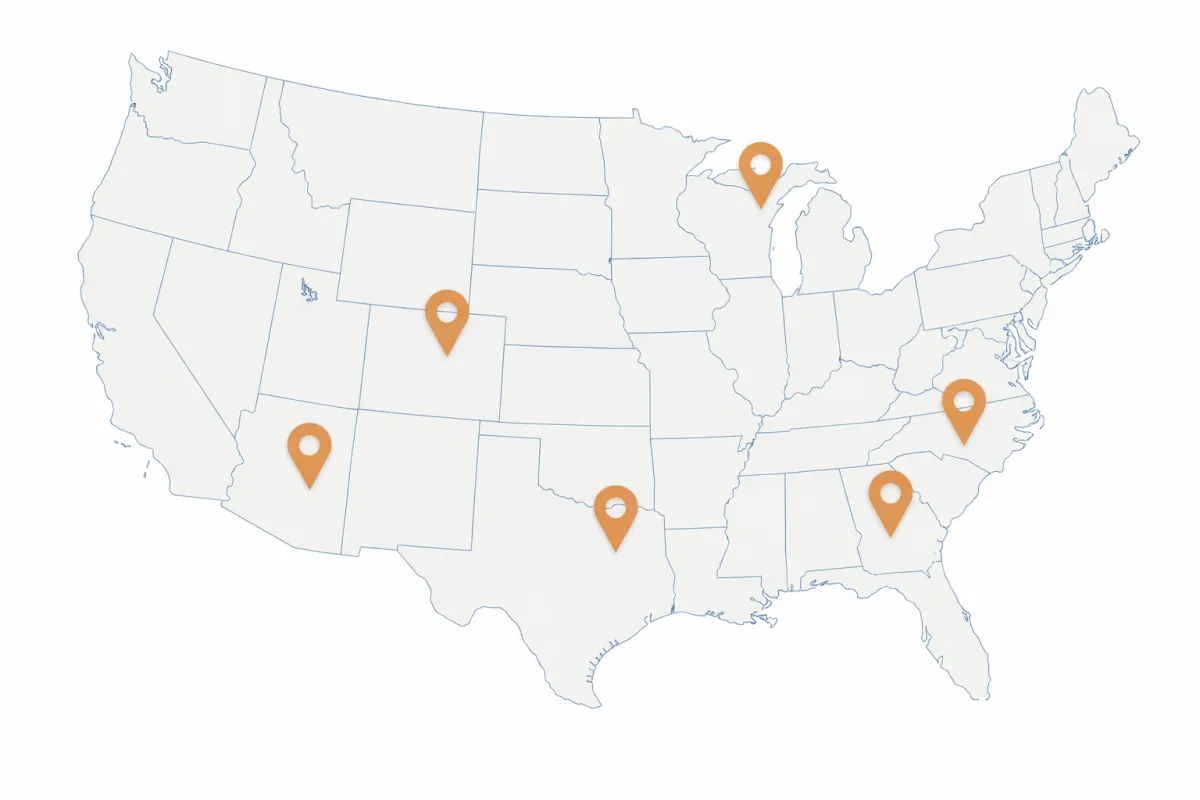
Flint, Michigan.
East Palestine, Ohio.
Texas freezes.
North Carolina flooding
Nevada mining runoff.
Camp Lejeune.
Different locations. Different causes. Same outcome.
Municipal water systems fail. Authorities issue advisories. Residents are told to boil water and wait.
And almost nobody asks the most important question:
What exactly does boiling fix?
The Assumption Most People Get Wrong
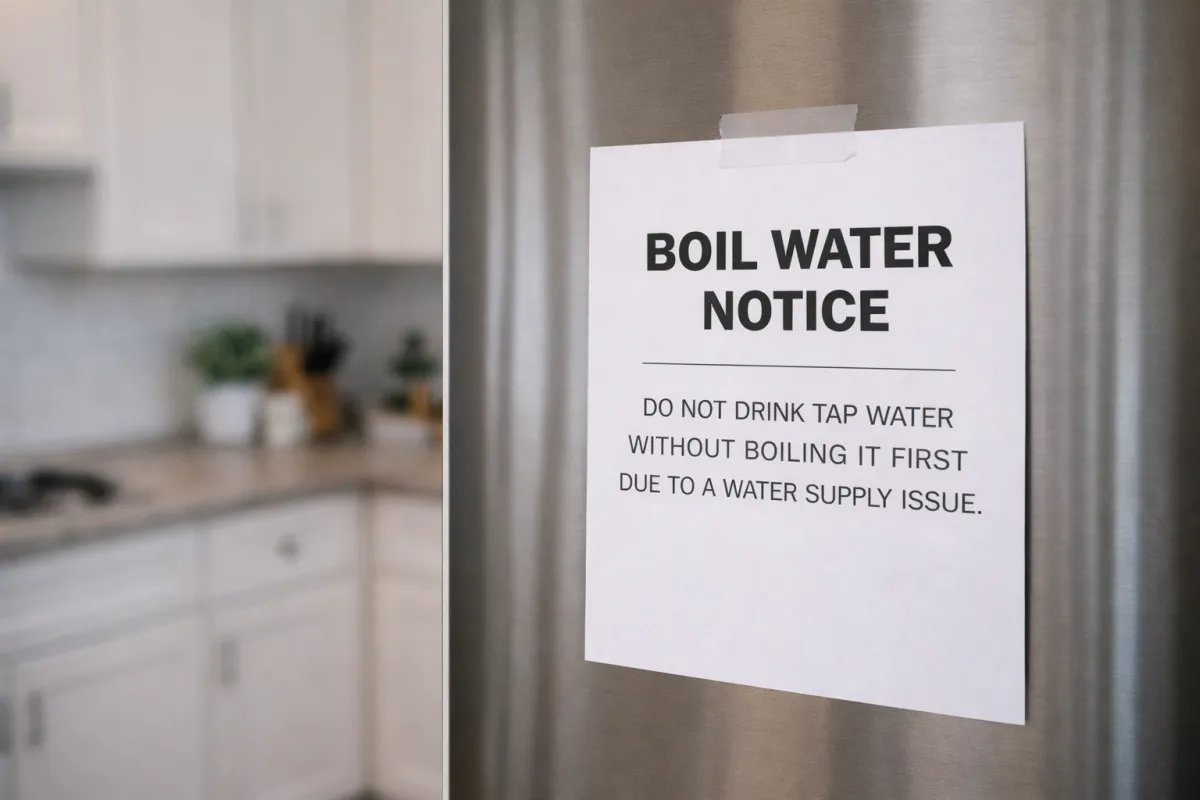
Boil water notices are designed to address biological contamination.
Bacteria. Viruses. Pathogens. That’s it.
Boiling does nothing for:
PFAS and forever chemicals
Arsenic
Heavy metals
Industrial runoff
Agricultural chemicals
Fuel byproducts
Chlorine and chloramine residues
In fact, boiling can actually concentrate some of these contaminants as water evaporates.
If your preparedness plan stops at boiling, you are only preparing for part of the problem. And it’s not the part that’s becoming more common.
The Shift No One Talks About
Municipal water systems were designed decades ago to handle:
Human waste
Naturally occurring bacteria
Sediment
They were not designed to handle:
Synthetic chemicals
Industrial byproducts
Pharmaceutical residue
Mining runoff
Fire suppression foam
Modern agricultural chemicals
This is why we keep seeing the same failures repeated across the country.
Not because people are careless. Because the infrastructure is outdated.
Case Study Pattern Recognition
North Carolina Flooding
Treatment plants submerged. Sewage, fuel, and agricultural waste entered the water supply. Residents were told to boil water.
Boiling did nothing for chemical exposure.
Texas Freeze and Flooding
Pumps failed. Pressure dropped. Contaminants entered through compromised pipes.
Brown water came out of taps. Boil notices followed.
Again, boiling addressed bacteria, not chemical contamination.
Nevada Mining Regions
Arsenic levels exceed recommended thresholds even during normal operation. Entire towns rely on bottled water.
Not because they distrust the water’s clarity. Because they understand what clarity does not indicate.
Camp Lejeune
Thirty years of chemical contamination. Legal. Undetected. Ignored.
Only acknowledged after irreversible damage occurred.
The Legal vs Safe Problem
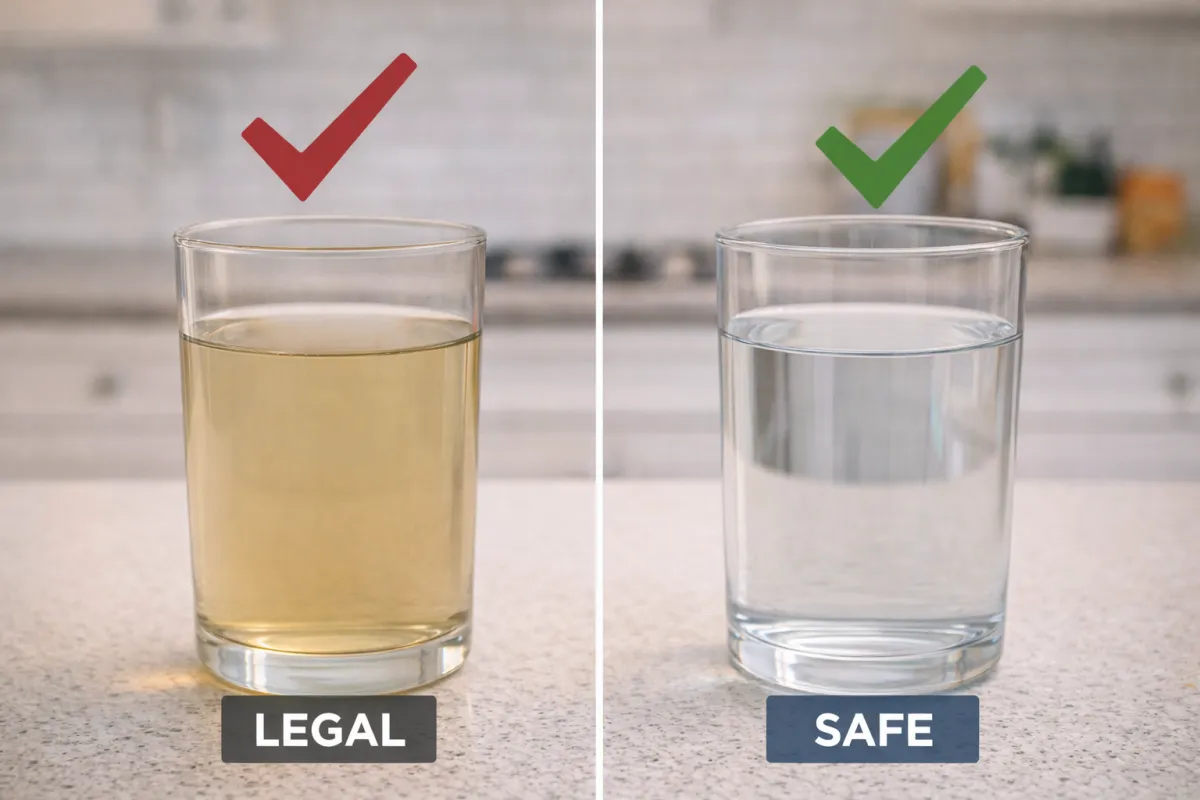
Most people assume water that meets regulations is safe. That assumption is dangerous.
Regulatory limits are:
Politically negotiated
Based on outdated studies
Focused on short-term exposure
“Legal” does not mean:
Free from harm
Safe for chronic exposure
Suitable for children
Safe during infrastructure stress
It means the system is compliant. Prepared households plan for system failure, not system compliance.
The False Sense of Security From Common Solutions
Many people believe they are protected because they have:
Pitcher filters
Fridge filters
Faucet attachments
Reverse osmosis systems
Bottled water stockpiles
Each has limitations that are rarely discussed.
Pitcher and Fridge Filters
Designed to improve taste. Minimal impact on PFAS or heavy metals. No mineral restoration.
Reverse Osmosis
Removes many contaminants. Also removes essential minerals. Produces demineralized water that is harder for the body to absorb long term.
Bottled Water
Often sourced from municipal supplies. Chemically treated to prevent mold. Plastic contamination increases with heat and storage time.
None of these represent a complete solution.
The Preparedness Gap
Most preparedness plans account for:
Food storage
Power outages
Fuel
Medical supplies
Firearms
Communication
Very few account for chemical water contamination.
That gap is growing. And it’s not hypothetical. It’s already happening.
The Missing Layer: Point-of-Use Chemical Defense
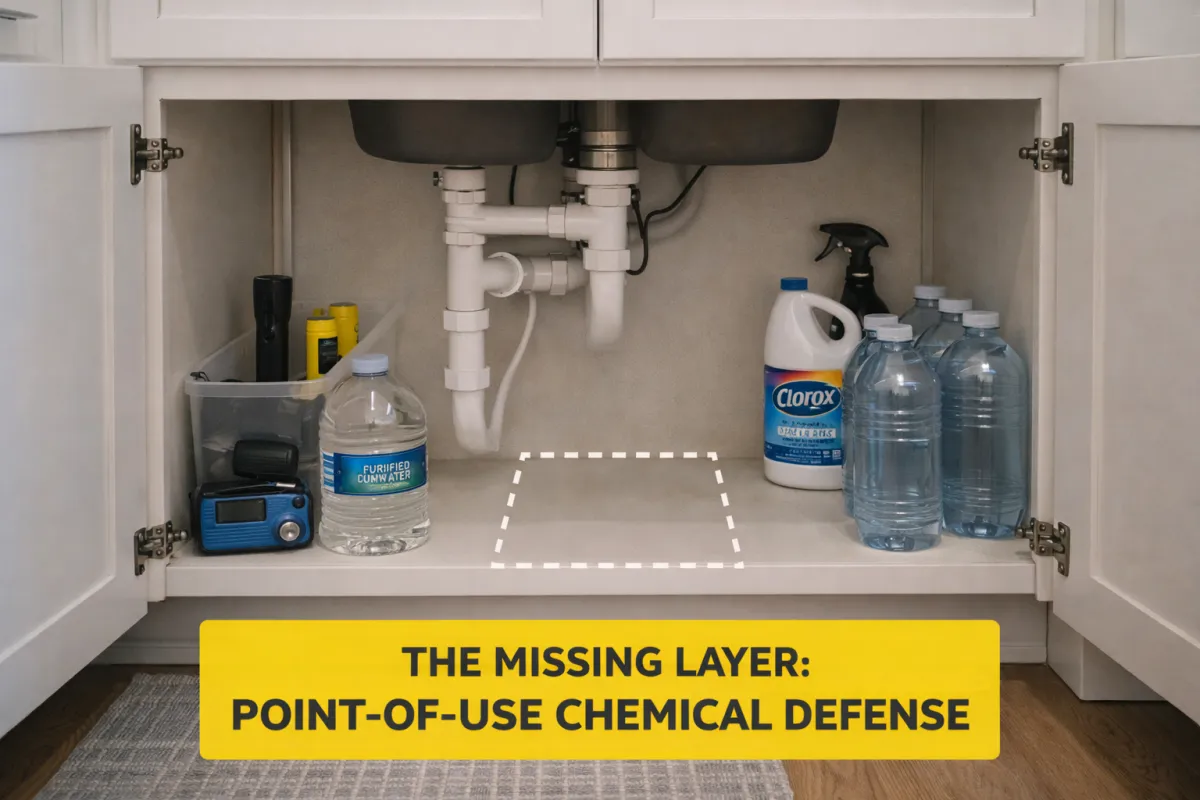
The only reliable way to protect against chemical contamination is to treat water at the point of use, after it enters your home.
Not at the plant. Not at the pipe. Not after it’s already been consumed.
This requires a system designed for:
Chemical removal
Long-term reliability
Minimal maintenance
Independence from municipal trust
That’s where most solutions fall apart.
Why Most Systems Still Fail
Most water systems focus on removal only.
They strip contaminants. They strip minerals. They leave behind water that is technically clean but biologically incomplete.
Long term use of demineralized water creates its own problems:
Poor hydration
Electrolyte imbalance
Increased kidney workload
Preparedness is not just about survival. It’s about sustainability.
The Sentry Approach
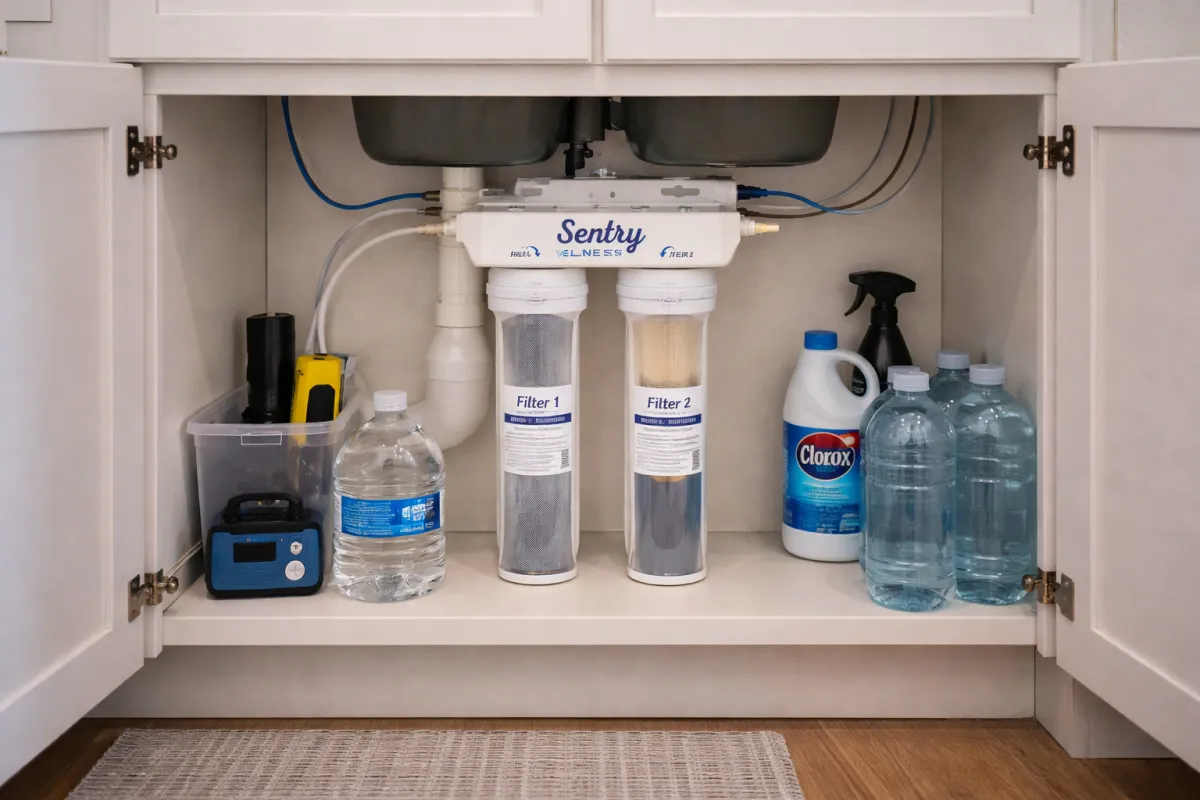
Sentry was built to address both sides of the problem.
First, it removes:
PFAS
Arsenic
Chlorine
Fluoride
Heavy metals
Industrial micro-toxins
Then it restores:
Magnesium
Essential minerals
Natural alkalinity
Oxygenation
The result is water that is:
Chemically defended
Biologically usable
Suitable for daily consumption
Independent of municipal assumptions
This is not emergency equipment. It’s preventative infrastructure.
Why This Matters Before a Crisis
Once contamination occurs, your options shrink quickly.
Boil notices do not help. Filters are overwhelmed. Bottled water disappears from shelves.
Prepared households act before the advisory. They close gaps before they are tested.
A Different Way to Think About Water Prep
Instead of asking: “How will I purify water after failure?”
Ask: “How do I prevent chemical exposure now?”
That shift changes everything.
Who This Is For
This is for households that:
Understand systems fail
Plan for infrastructure stress
Prefer redundancy over trust
Want water security without constant intervention
It is not for people who believe compliance equals safety.
The Decision Point
You can continue assuming:
Your municipality will warn you in time
Boiling will solve the problem
Clear water is clean water
Or you can close the gap now.
Preparedness is not about fear. It’s about removing single points of failure.
Learn More About Sentry
If you want to understand how Sentry fits into a serious preparedness plan, you can learn more here:
It installs at the point of use. It operates continuously. And it does not rely on perfect infrastructure to protect you.